

What a Year of Coaching Staff Relocations Taught Us About Group-Move Budgets
FY26 results from 5 athletic departments: $260K under budget, 26% net savings, and the allowance policies that made the difference
A coaching change rarely moves one person. It moves a staff, often on various timelines, with families, storage and start dates all in play. For an athletic department, that means a burst of relocation spend that's hard to forecast and easy to overrun.
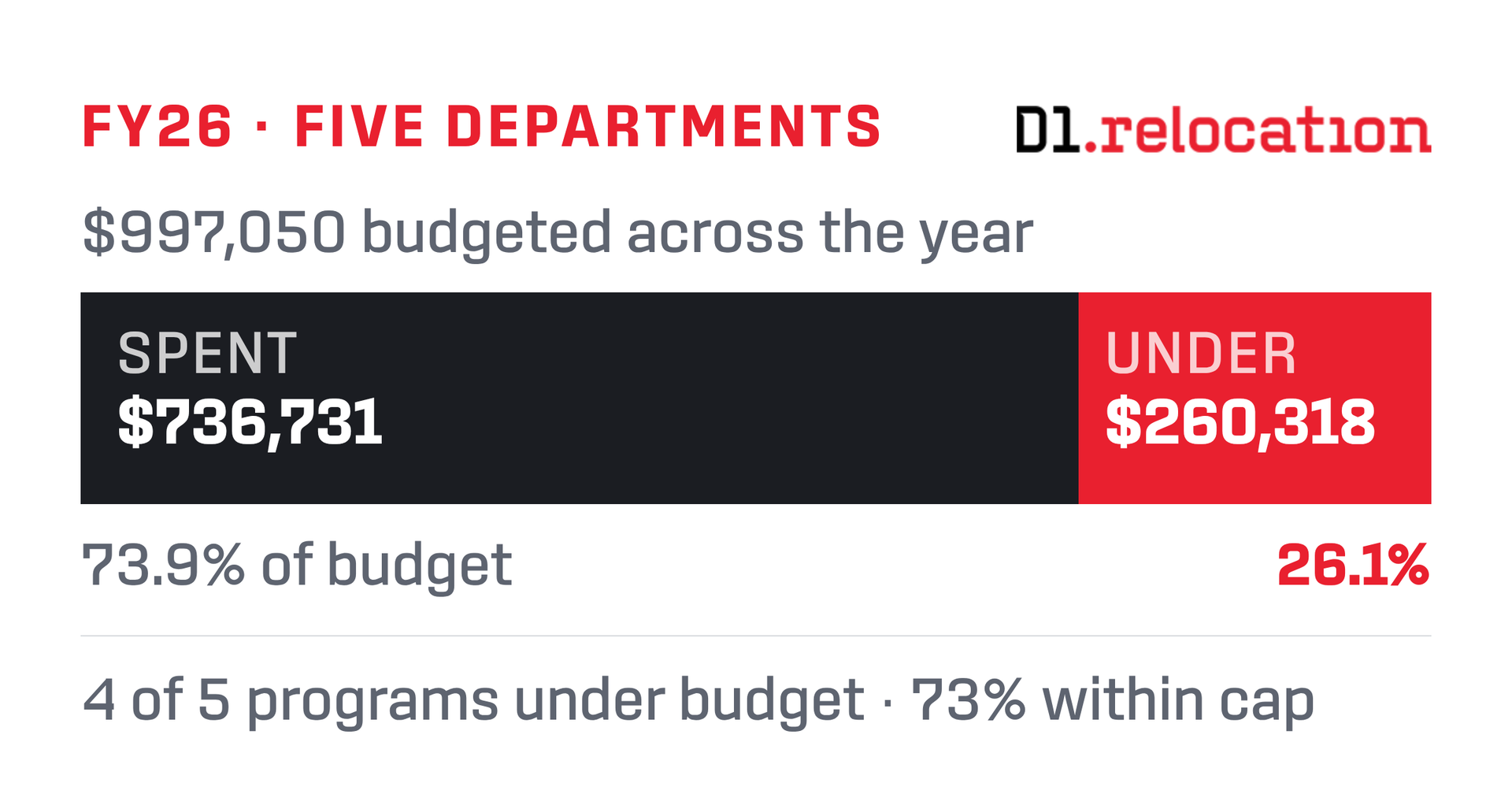
In FY26 D1.relocation managed those relocations for 5 athletic departments. Together they were budgeted at $997,050. Actual spend was $736,731, which returned $260,319 (26.1%) to department budgets.
The scorecard
- 4 of 5 programs finished under budget
- 73% of moves stayed within their allowance cap
- 41.6%: savings at the top-performing program
- 62.5 hours of internal admin time reclaimed at a single program
Lesson 1: Tiered caps work when they fit the role
The strongest program used three tiers: fixed allowances for staff, a cap for executives and a cap for everyone else. Every fixed-allowance move came in under cap, and all but one executive move did too.
Executive moves are where the dollars concentrate. At that program they made up 54% of spend. A defined cap kept them predictable.
Lesson 2: A cap below market is a cap that will be broken
At one program, every fixed-allowance move went over. The gap was in cap vs. actual costs ran. That wasn't overspending. Service Provider minimums simply sat above the allowance, and the gap became out-of-pocket friction for new staff.
The same program's executive tier, finished under budget. The lesson: benchmark caps against service provider rates and mileage before offer letters go out.
Lesson 3: Unmanaged spend drifts
Only one program finished over budget, by 2.8%. 40% of its moves exceeded their cap. Moving those hires to managed budget with direct billing would have closed the gap.
Lesson 4: Lean budgets can still save
The smallest-budget program had the lowest average cost per move. 80% of its moves stayed within their cap, and the program returned 23.7% to the department.
Planning your next group move
- Set tiers by role, with a defined executive cap.
- Benchmark every cap against current rates.
- Route spend through managed vendors instead of open reimbursement.
- Offload the admin so your staff isn't coordinating movers during a transition.
A coaching change is stressful enough. The relocation budget doesn't have to be. The earlier the plan, the easier the landing.
Start your move with D1.relocation
Results reflect FY26 client programs, anonymized. Individual results vary with allowance policy and move volume.